
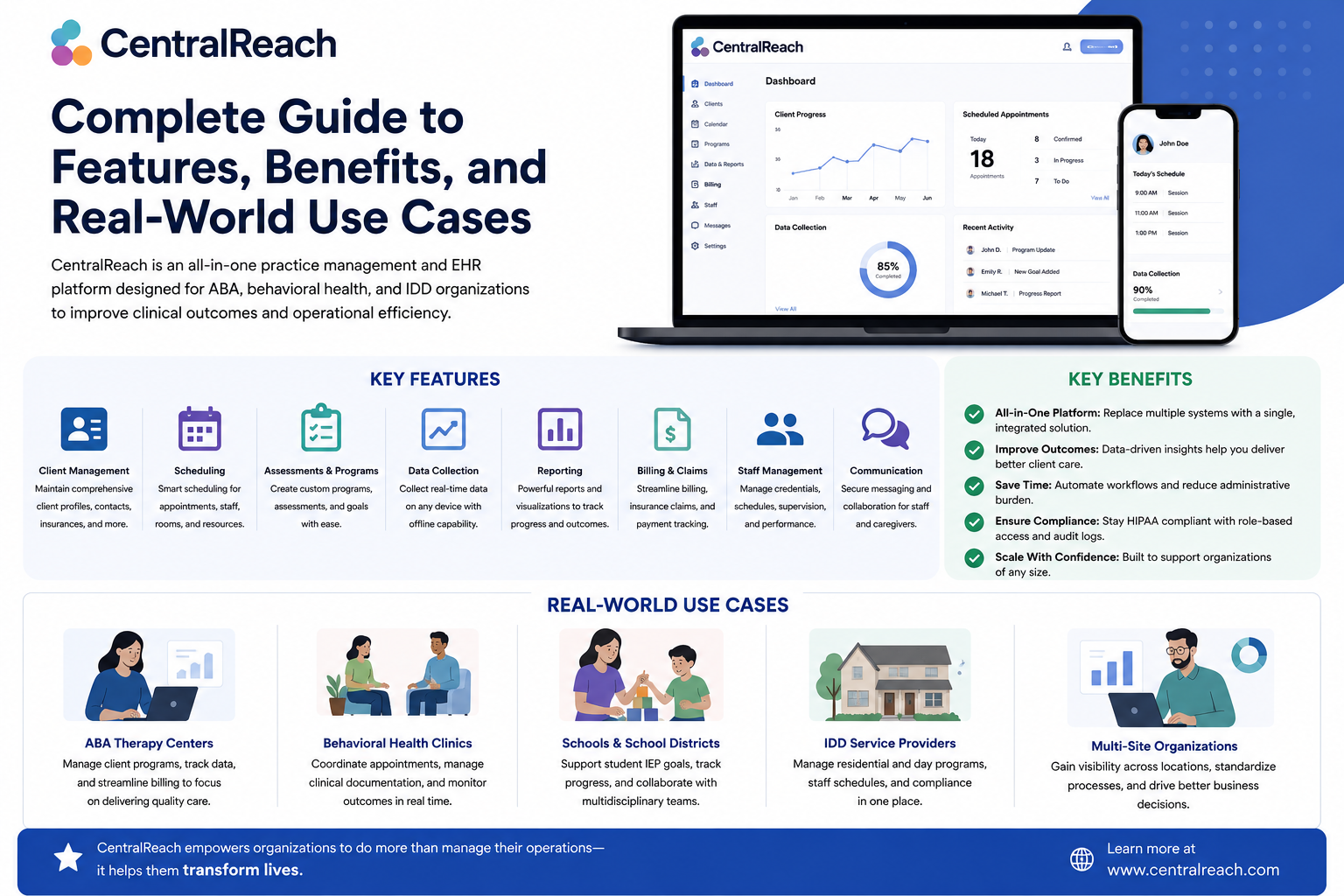
In today’s fast-moving healthcare and behavioral therapy world, digital platforms are no longer optional—they’re essential. One platform that stands out in this space is centralreach, a widely used solution designed to simplify clinical workflows, improve data accuracy, and support therapy providers in delivering better care.
Whether you are part of an ABA therapy clinic, a behavioral health organization, or a healthcare administrator, understanding how systems like centralreach operate can help you streamline operations and reduce administrative stress. This article breaks everything down in a simple, human-friendly way so you can see how it actually works in real life.
The goal here is not just to explain what it is, but to show how it transforms everyday tasks like scheduling, billing, compliance tracking, and data collection into a more efficient and organized system.
What Is centralreach and Why It Matters
centralreach is a cloud-based platform designed primarily for autism therapy providers, behavioral health organizations, and ABA (Applied Behavior Analysis) practices. It combines practice management, electronic health records (EHR), data collection tools, and billing systems into one unified system.
Instead of juggling multiple tools for scheduling, documentation, and reporting, therapists and administrators can manage everything in one place. This reduces errors, saves time, and ensures better coordination between clinical and administrative teams.
Another reason centralreach is so important is its focus on behavioral health workflows. It is not a generic healthcare system—it is specifically tailored to meet the needs of ABA therapists, making it more relevant and efficient for that field compared to general-purpose software.
Core Features That Power centralreach
The strength of centralreach lies in its wide range of integrated features. These tools are designed to support both clinical and operational sides of a therapy practice.
One of its core features is electronic data collection, which allows therapists to record patient progress in real time during sessions. This ensures accurate tracking of behavioral goals and reduces manual paperwork.
Another major feature is scheduling automation. Clinics can assign appointments, manage cancellations, and optimize therapist availability without constant back-and-forth communication. It also includes billing tools that streamline insurance claims and payment tracking, reducing delays in reimbursement.
How centralreach Supports ABA Therapy Practices
ABA therapy relies heavily on structured data collection, individualized treatment plans, and consistent tracking of progress. centralreach plays a critical role in simplifying these processes.
Therapists can use digital session notes, track behavioral patterns, and instantly update progress reports. This helps reduce errors that often come from handwritten documentation or delayed data entry.
In addition, supervisors such as BCBAs (Board Certified Behavior Analysts) can review data remotely, making it easier to supervise multiple cases without being physically present at all times. This improves both efficiency and oversight in therapy delivery.
Workflow Automation and Daily Operations
One of the most valuable aspects of centralreach is workflow automation. Clinics often struggle with repetitive administrative tasks, but this platform reduces that burden significantly.
Tasks like appointment reminders, billing submissions, and report generation can be automated, allowing staff to focus more on patient care instead of paperwork.
By centralizing these processes, the system also reduces miscommunication between departments. Everything from intake forms to insurance verification is handled within a single ecosystem, making operations smoother and more predictable.
Key Benefits of Using centralreach
The benefits of centralreach extend across clinical, administrative, and financial areas of a practice. One of the biggest advantages is improved efficiency. Teams spend less time switching between systems and more time focusing on patient care.
Another major benefit is data accuracy. Since information is entered in real time, there is less chance of errors or missing documentation. This is especially important in behavioral health, where accurate data directly impacts treatment decisions.
The platform also enhances collaboration. Therapists, supervisors, and administrators can all access the same information, ensuring everyone is aligned on patient progress and treatment goals.
Feature Comparison Table
Below is a simplified comparison of key areas managed within centralreach:
| Feature Area | Functionality Description | Benefit to Clinics |
|---|---|---|
| Data Collection | Real-time behavioral tracking during therapy sessions | Improved accuracy and progress monitoring |
| Scheduling System | Appointment booking and management | Reduced scheduling conflicts |
| Billing Management | Insurance claims and payment tracking | Faster reimbursements |
| EHR System | Centralized patient records | Better organization and compliance |
| Reporting Tools | Automated progress and compliance reports | Easier supervision and decision-making |
This structure allows clinics to operate more efficiently without relying on separate tools for each task.
Technology Behind centralreach
The technology behind centralreach is built on cloud infrastructure, meaning users can access it from anywhere with an internet connection. This is especially useful for therapy providers who work across multiple locations or offer in-home services.
The platform also integrates secure data storage protocols to ensure patient confidentiality. Since behavioral health data is highly sensitive, security and compliance are key priorities within the system.
Another important aspect is its scalability. Whether a clinic has five therapists or five hundred, the system can scale without losing performance or functionality.
Implementation in Real-World Clinics
Implementing centralreach in a clinic usually involves onboarding staff, migrating patient data, and configuring workflows based on the organization’s needs.
During the transition phase, clinics often experience improved organization almost immediately because fragmented systems are replaced with a unified platform. Staff training is essential to ensure everyone uses the system correctly and efficiently.
Over time, clinics typically notice reduced administrative workload, faster billing cycles, and improved communication between therapists and supervisors.
Challenges and Considerations
While centralreach offers many advantages, it also comes with certain challenges. One common issue is the learning curve. New users may take time to fully understand all features and workflows.
Another consideration is customization complexity. Because the system is highly detailed, setting it up according to a clinic’s exact needs can require careful planning and technical support.
Despite these challenges, most organizations find that the long-term benefits outweigh the initial setup difficulties, especially once the system is fully integrated into daily operations.
Why centralreach Is Transforming Behavioral Health
The behavioral health industry is rapidly evolving, and digital transformation is at the center of that change. centralreach plays a key role in this shift by replacing outdated manual systems with modern, data-driven tools.
As one clinic administrator put it: “Once we moved everything into a unified system, our team finally had time to focus on patients instead of paperwork.”
This reflects a broader trend in healthcare where technology is not just supporting operations—it is reshaping how care is delivered.
Conclusion
centralreach has become a powerful solution for behavioral health and ABA therapy providers looking to improve efficiency, accuracy, and collaboration. By integrating scheduling, billing, data collection, and reporting into a single platform, it eliminates many of the inefficiencies that traditional systems struggle with.
Although it requires initial setup and training, the long-term impact on productivity and patient care is significant. Clinics that adopt it often experience smoother workflows and better clinical outcomes.
In a healthcare environment where precision and time matter more than ever, tools like centralreach are not just helpful—they are becoming essential.
FAQ Section
What is centralreach used for in healthcare?
centralreach is used to manage behavioral health and ABA therapy operations, including scheduling, billing, data collection, and patient records. It helps clinics streamline daily workflows and improve efficiency across teams.
Is centralreach suitable for small therapy clinics?
Yes, centralreach can be used by both small and large clinics. Smaller practices benefit from its automation features, while larger organizations use it for scaling operations and managing multiple teams effectively.
How does centralreach help ABA therapists?
centralreach supports ABA therapists by enabling real-time data collection, session tracking, and progress monitoring. This allows therapists to focus more on patient care while reducing paperwork and manual reporting tasks.
Does centralreach improve billing and insurance processes?
Yes, centralreach simplifies billing by automating insurance claims, tracking payments, and reducing administrative errors. This helps clinics receive reimbursements faster and more accurately.
Is centralreach difficult to learn for new users?
centralreach can have a learning curve due to its wide range of features. However, with proper training and onboarding, most users become comfortable with the system and benefit from its full capabilities over time.
Can centralreach be used remotely?
Yes, since centralreach is cloud-based, it can be accessed from anywhere with an internet connection. This makes it ideal for remote therapy sessions, multi-location clinics, and mobile practitioners.
