
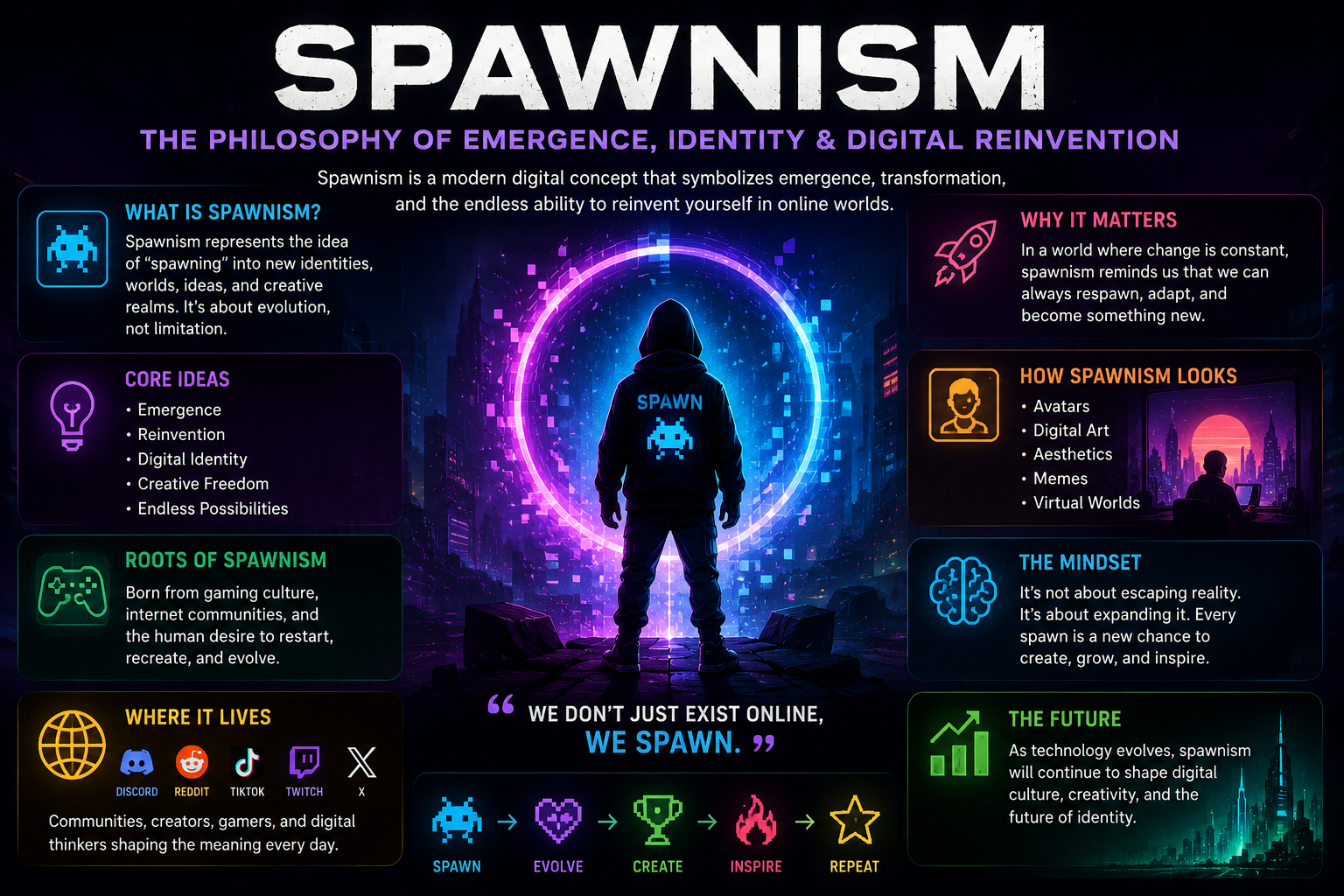
The internet constantly creates new ideas, movements, identities, and trends. Some fade away quickly, while others develop into larger conversations that shape online communities and creative culture. One term that has recently sparked curiosity is spawnism. Although still relatively niche, the word has been appearing in discussions connected to digital identity, creativity, internet philosophy, gaming culture, and online expression.
People searching for spawnism are often trying to understand what it really means, where it originated, and why it has started attracting attention in online spaces. Unlike traditional concepts with fixed definitions, spawnism exists in a flexible and evolving form. That makes it fascinating for internet users, creators, bloggers, gamers, and digital thinkers alike.
The appeal of spawnism comes from its mystery and adaptability. Some view it as a cultural idea connected to creation and rebirth in digital environments. Others interpret it as an online philosophy tied to identity, transformation, and creativity. Because internet culture evolves rapidly, words like spawnism often gain momentum through communities rather than formal academic definitions.
“Modern internet culture thrives on concepts that people can interpret in multiple ways, and spawnism fits perfectly into that environment.”
In this article, we will explore the origins, interpretations, cultural significance, digital relevance, creative influence, and future potential of spawnism. We will also look at how the term connects to online communities, gaming language, social media trends, and internet creativity.
The Meaning Behind Spawnism
At its core, spawnism appears to stem from the word “spawn,” a term commonly associated with creation, appearance, or emergence. In gaming environments, spawning refers to the moment a character, object, or entity appears within a virtual world. Over time, internet users began expanding the meaning of the word into broader cultural and symbolic interpretations.
Spawnism can therefore be understood as an idea centered around emergence, transformation, creation, or digital existence. It reflects the way individuals reinvent themselves online, create identities, participate in communities, and continuously evolve within digital spaces.
One reason spawnism has become interesting is because it does not belong to a single category. It overlaps with internet culture, gaming communities, creative philosophy, social identity, and artistic expression. That flexibility allows people to define it differently depending on context.
Some communities treat spawnism almost like a mindset. In this interpretation, the concept encourages people to embrace reinvention, experimentation, and creative freedom. Instead of remaining fixed in one identity or style, individuals continuously “spawn” new versions of themselves through online interaction and content creation.
The Origins and Evolution of Spawnism
The exact origins of spawnism remain unclear, which is common for many internet-born concepts. Online culture often develops organically through memes, forums, gaming communities, and social discussions. Words spread quickly, especially when they resonate emotionally or creatively with users.
Gaming culture likely played a major role in the evolution of spawnism. Multiplayer games introduced millions of users to the concept of spawning. Every time a player entered a game world, respawned after defeat, or generated new content, the idea of “spawning” became embedded in digital language.
Over time, internet users began applying the concept metaphorically. Instead of referring only to game mechanics, spawning became associated with new trends, creative ideas, identities, and cultural movements. From there, spawnism emerged as a broader symbolic term.
The development of spawnism also reflects how internet language evolves differently from traditional language systems. Unlike dictionary-based terminology, online expressions gain meaning through shared usage. Communities collectively shape interpretation over time.
Table: Evolution of Spawnism in Digital Culture
| Stage | Description | Influence |
|---|---|---|
| Gaming Era | Spawn used in video games | Introduced concept of emergence |
| Meme Culture | Online communities adapted the word | Expanded symbolic meaning |
| Social Media Growth | Users connected it to identity | Increased visibility |
| Creative Interpretation | Artists and creators embraced flexibility | Spawnism became philosophical |
| Modern Digital Usage | Seen as a broader internet concept | Ongoing cultural evolution |
This gradual evolution explains why spawnism feels both familiar and mysterious at the same time.
Spawnism and Internet Identity
One of the strongest interpretations of spawnism relates to digital identity. Online spaces allow people to present themselves differently than they might in the physical world. Social media platforms, gaming profiles, avatars, usernames, and virtual communities all encourage experimentation with identity.
Spawnism fits naturally into this environment because it symbolizes continuous reinvention. Instead of having a single fixed identity, users can create multiple versions of themselves depending on platform, audience, or purpose.
For example, a person might be a professional on LinkedIn, a gamer on Twitch, an artist on Instagram, and an anonymous commentator on Reddit. Each version represents a different “spawn” of identity.
This flexibility is one reason younger internet users especially connect with ideas like spawnism. Digital culture rewards creativity, adaptability, and self-expression. Rather than remaining static, online identities constantly evolve.
Another important factor is anonymity. The internet allows individuals to experiment without traditional social limitations. Spawnism therefore becomes connected to freedom and exploration within digital environments.
“The internet gives people the ability to reinvent themselves endlessly, and spawnism reflects that constant cycle of transformation.”
As online culture continues expanding into virtual worlds, AI spaces, and digital communities, concepts connected to identity evolution will likely become even more important.
The Connection Between Spawnism and Gaming Culture
Gaming culture remains one of the strongest foundations behind spawnism. Video games introduced the mechanics and terminology that later inspired broader cultural interpretations.
In gaming, spawning represents entry, rebirth, and continuation. A player who loses can respawn and continue the journey. This mechanic created emotional associations with resilience and persistence.
Many gamers subconsciously connect spawning with second chances and continuous growth. Spawnism extends those ideas into broader life and digital culture themes.
Open-world games especially influenced this perspective. Virtual environments where players create characters, build worlds, and explore endless possibilities naturally support concepts tied to emergence and reinvention.
Gaming communities also helped spread internet terminology into mainstream digital culture. Words once limited to niche gaming spaces are now common across social media and online communication.
Popular gaming genres connected to the idea of spawnism include:
| Gaming Genre | Connection to Spawnism |
|---|---|
| MMORPGs | Identity creation and roleplay |
| Sandbox Games | Creativity and world-building |
| Survival Games | Rebirth and persistence |
| Multiplayer Shooters | Respawn mechanics |
| Virtual Reality Games | Digital existence and immersion |
Because gaming culture continues influencing mainstream entertainment, the visibility of terms like spawnism may continue growing.
Spawnism as a Creative Philosophy
Beyond gaming and identity, spawnism can also be viewed as a creative philosophy. In creative communities, originality often comes from experimentation and adaptation rather than rigid perfection.
Artists, writers, designers, musicians, and digital creators constantly generate new ideas. Spawnism aligns with that process because it embraces emergence and evolution instead of fixed outcomes.
Creative people rarely produce a perfect final product immediately. Ideas develop through experimentation, failure, revision, and reinvention. Spawnism reflects this ongoing creative cycle.
Social media platforms accelerated this process. Creators now produce content continuously, testing ideas in real time. Trends appear and disappear rapidly, encouraging constant reinvention.
This environment rewards creators who adapt quickly. Spawnism therefore becomes associated with creative momentum and digital innovation.
Another reason creative communities connect with spawnism is its openness. Unlike rigid artistic theories, spawnism allows interpretation. Different creators can apply it in unique ways.
Some see it as a mindset focused on creative rebirth. Others interpret it as the ability to generate new perspectives repeatedly. The ambiguity itself becomes part of the appeal.
Social Media and the Rise of Spawnism
Social media platforms have played a major role in spreading niche internet concepts. Algorithms often reward unusual or emotionally engaging terms, causing certain words to gain visibility rapidly.
Spawnism benefits from this environment because it sounds intriguing and open-ended. Users encountering the term often become curious enough to search for explanations, discussions, or interpretations.
Platforms like TikTok, Reddit, Discord, X, and Instagram encourage community-driven language evolution. Words can gain entirely new meanings depending on how communities use them.
Short-form content especially accelerates this process. A single viral video or meme can introduce a niche concept to millions of users almost instantly.
Spawnism also fits the internet’s fascination with aesthetics and identity movements. Online users often enjoy attaching themselves to labels, philosophies, or cultural concepts that feel unique and expressive.
Some creators use spawnism artistically, while others treat it humorously or philosophically. That flexibility increases its viral potential because multiple communities can adopt it simultaneously.
Social Media Factors That Help Spawnism Grow
| Factor | Impact |
|---|---|
| Viral Short Videos | Increased curiosity |
| Meme Sharing | Rapid cultural spread |
| Community Discussions | Evolving interpretations |
| Gaming Content | Strong audience overlap |
| Creative Branding | Unique identity appeal |
The decentralized nature of internet culture means spawnism may continue evolving unpredictably in future years.
Psychological Appeal of Spawnism
The popularity of concepts like spawnism is not accidental. They resonate psychologically because they reflect deeper human desires connected to identity, creativity, and transformation.
People naturally seek opportunities for reinvention. Digital spaces provide environments where individuals can experiment with appearance, personality, and self-expression.
Spawnism symbolizes possibility. Instead of being trapped by past versions of themselves, users can continuously create new identities and experiences.
This idea becomes especially appealing during times of rapid technological and social change. The internet moves quickly, and people often feel pressure to adapt constantly. Spawnism captures that modern experience.
There is also comfort in the idea of respawning or starting over. Gaming culture normalized the idea that failure is temporary. In digital environments, users can rebuild, restart, and reinvent themselves repeatedly.
Psychologically, this creates a sense of freedom and resilience.
“Digital culture rewards reinvention, and spawnism reflects humanity’s growing comfort with evolving identities.”
The emotional appeal of spawnism therefore extends beyond simple internet slang.
Spawnism and Digital Communities
Online communities thrive when members share symbols, language, and ideas. Spawnism functions as one of those shared cultural concepts that helps communities form around common interests.
Discord servers, gaming forums, creative groups, and meme communities often create their own micro-cultures. Terms like spawnism strengthen group identity because they feel exclusive yet adaptable.
Community-driven language also creates belonging. When users understand or participate in a concept, they feel connected to others who share similar interpretations.
Spawnism works particularly well in digital communities because it does not require strict rules. People can participate creatively without needing formal definitions.
This openness encourages engagement. Users debate meanings, create content, design aesthetics, and build discussions around the term.
As digital communities continue becoming more influential socially and culturally, internet-born ideas like spawnism may gain even broader recognition.
The Aesthetic Side of Spawnism
Modern internet culture heavily emphasizes aesthetics. Visual identity, mood, symbolism, and atmosphere play major roles in online communication.
Spawnism naturally aligns with aesthetic culture because it evokes imagery connected to emergence, digital worlds, transformation, and futuristic creativity.
Some online users associate spawnism with cyber aesthetics, neon visuals, surreal imagery, or experimental digital art. Others connect it to darker gaming-inspired themes involving mystery and rebirth.
This flexibility makes spawnism visually adaptable across multiple artistic styles.
Popular aesthetic themes connected to spawnism include:
| Aesthetic Style | Connection |
|---|---|
| Cyberpunk | Digital transformation |
| Vaporwave | Internet nostalgia |
| Futuristic Art | Technological evolution |
| Gaming Visuals | Virtual emergence |
| Experimental Design | Creative reinvention |
Because aesthetics drive engagement on platforms like Instagram and TikTok, concepts with strong visual potential often spread more effectively.
Spawnism in Modern Digital Philosophy
As internet culture matures, more people are treating online concepts philosophically. Spawnism can therefore be interpreted as part of a broader digital philosophy about identity and existence.
Traditional identity models assumed relative stability. Digital culture disrupted that assumption. People now maintain multiple identities across different platforms and communities.
Spawnism reflects this fragmented yet creative form of existence. Instead of seeing identity as singular, it embraces multiplicity and continuous evolution.
The rise of virtual reality, AI-generated avatars, metaverse projects, and online personas may push these philosophical ideas even further.
In future digital environments, individuals may constantly shift appearances, behaviors, and identities depending on context. Spawnism already symbolically represents that possibility.
Some digital thinkers even argue that online existence itself resembles spawning into different realities. Every platform becomes a separate environment with unique expectations and cultural norms.
Whether viewed philosophically or creatively, spawnism captures an important aspect of modern internet life.
Why Spawnism Is Gaining Attention
Several factors explain why spawnism continues attracting curiosity online.
First, the term feels modern and mysterious. Internet users are naturally drawn to words that seem open to interpretation.
Second, spawnism connects to multiple popular digital themes simultaneously. It relates to gaming, identity, creativity, aesthetics, social media, and internet philosophy.
Third, the rise of digital self-expression makes concepts about reinvention increasingly relevant. Younger audiences especially value flexibility in identity and creativity.
Another major factor is algorithmic culture. Platforms reward engagement, and unusual concepts often generate discussions, reactions, and searches.
Finally, spawnism reflects broader cultural shifts toward digital existence. As more of life moves online, concepts explaining online behavior and identity become culturally important.
Future Possibilities of Spawnism
The future of spawnism remains unpredictable, but its flexibility gives it strong potential for continued evolution.
Some internet concepts disappear quickly after brief popularity. Others develop into long-lasting cultural movements. Spawnism has characteristics that could allow it to grow further.
Potential future developments include:
| Future Direction | Possibility |
|---|---|
| Artistic Movement | Expanded use in digital art |
| Gaming Philosophy | Symbolic gaming culture term |
| Social Identity Trend | Connection to online personas |
| Internet Subculture | Dedicated communities |
| Creative Branding | Used in fashion or media |
Its adaptability may become its greatest strength. Because spawnism does not have rigid boundaries, communities can continuously reinterpret it.
As technology evolves through AI, virtual reality, and immersive online spaces, ideas connected to emergence and identity transformation may become even more relevant.
Common Misunderstandings About Spawnism
Since spawnism lacks a strict universal definition, misunderstandings naturally occur. Some people assume it refers exclusively to gaming mechanics, while others view it purely as internet slang.
In reality, spawnism appears to function more like a flexible cultural concept rather than a fixed ideology.
Another misunderstanding is assuming the term has academic or official origins. Spawnism primarily exists through community usage and evolving interpretation.
Some users also overcomplicate the idea. While philosophical interpretations exist, the concept can remain simple: emergence, reinvention, and creative digital identity.
The openness of spawnism is part of its appeal rather than a weakness.
“Internet-born concepts often survive because they evolve instead of remaining fixed.”
This adaptability allows spawnism to remain relevant across changing online environments.
Related Keywords Connected to Spawnism
To better understand spawnism, it helps to explore related digital culture concepts that overlap with it.
Related Terms and Their Meanings
| Keyword | Meaning |
|---|---|
| Digital Identity | Online self-representation |
| Internet Culture | Shared online behavior and trends |
| Virtual Existence | Life within digital environments |
| Online Persona | Alternate internet identity |
| Gaming Culture | Communities shaped by video games |
| Digital Creativity | Creative work produced online |
| Meme Philosophy | Symbolic internet-driven ideas |
| Cyber Aesthetics | Futuristic online visual style |
These related concepts help explain why spawnism resonates with modern internet audiences.
How Brands and Creators Could Use Spawnism
Emerging internet concepts often become valuable branding opportunities. Because spawnism sounds modern and distinctive, creators and brands may eventually incorporate it into creative projects.
Fashion labels, gaming brands, digital artists, and online creators frequently adopt niche internet terminology to build unique identities.
Spawnism has branding potential because it suggests innovation, transformation, and digital culture awareness.
Possible uses include:
- Gaming communities and merchandise
- Digital art projects
- Futuristic fashion branding
- Creative media campaigns
- Experimental online communities
The term’s flexibility allows brands to adapt it creatively without strict limitations.
As internet aesthetics continue influencing mainstream culture, niche concepts may increasingly shape branding strategies.
Conclusion
Spawnism represents more than just another internet buzzword. It reflects the evolving nature of digital identity, creativity, gaming culture, and online transformation. Although its meaning remains flexible, that openness is exactly what gives the concept cultural power.
In a world where people constantly reinvent themselves online, spawnism captures the spirit of emergence and adaptation. It symbolizes the ability to create, evolve, restart, and explore new forms of expression within digital spaces.
The rise of gaming culture, social media, virtual communities, and online aesthetics all contributed to the growing interest in spawnism. As technology continues reshaping human interaction, ideas connected to digital existence will likely become even more important.
Whether viewed as a philosophy, aesthetic, cultural trend, or creative mindset, spawnism reflects the internet’s endless ability to generate new forms of identity and expression.
FAQ About Spawnism
What is spawnism?
Spawnism is an evolving internet concept connected to digital identity, creativity, emergence, and online transformation. The term is often associated with gaming culture and creative reinvention.
Why is spawnism becoming popular online?
Spawnism is gaining popularity because it connects with modern internet culture, gaming communities, digital aesthetics, and social media identity trends. Its flexible meaning also encourages curiosity and discussion.
Is spawnism related to gaming?
Yes, spawnism has strong roots in gaming culture. The term “spawn” originally referred to characters or objects appearing in virtual worlds, and that idea later expanded into broader digital culture.
Can spawnism be considered a philosophy?
Some people interpret spawnism philosophically because it reflects ideas about identity evolution, creativity, and digital existence. However, it remains an open and community-driven concept rather than a formal philosophy.
How does spawnism connect to social media?
Spawnism connects to social media because online platforms encourage self-expression, reinvention, and creative identity building. Users often adapt the concept in artistic, humorous, or symbolic ways.
Is there an official definition of spawnism?
No official universal definition currently exists for spawnism. Its meaning continues evolving through online communities, discussions, and creative interpretation.
Could spawnism become a larger internet movement?
It is possible. Spawnism has qualities shared by many successful internet trends, including adaptability, aesthetic appeal, and strong connections to digital culture and creativity.
